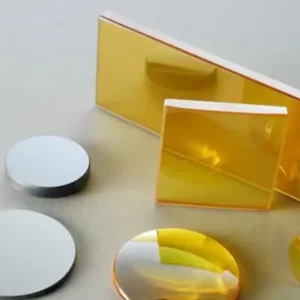


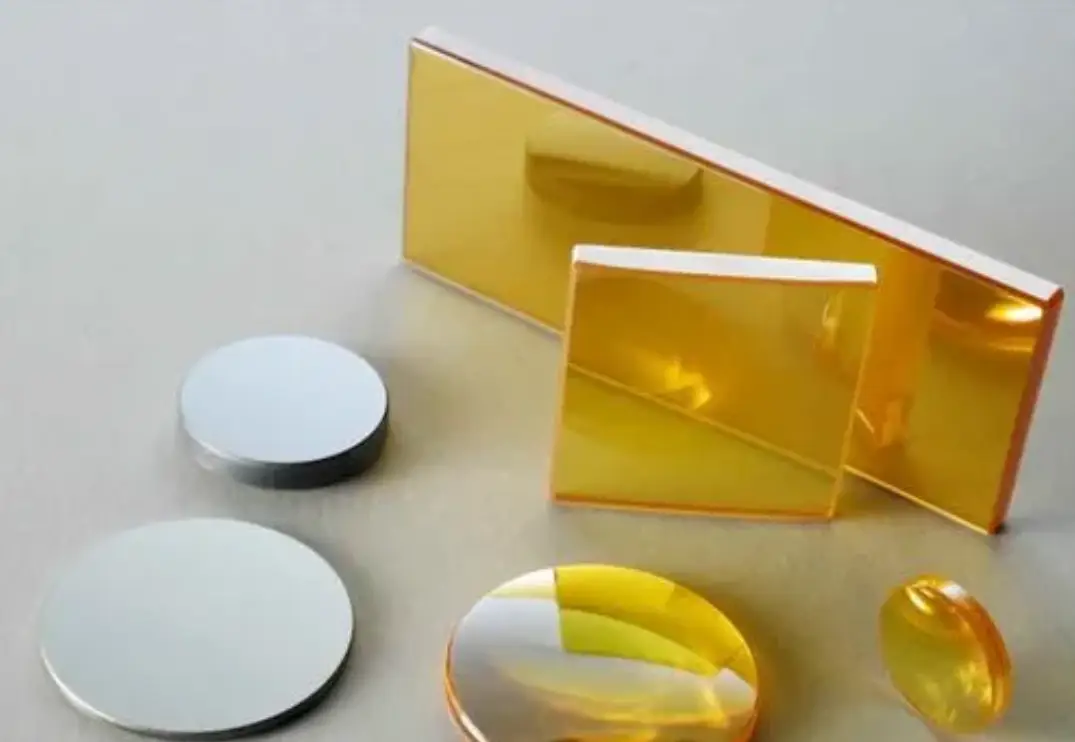


Description
Shape Optics Zinc Sulfide (ZnS) Clear Grade Protective Window Specifications
| Parameter | Specification |
|---|---|
| Bevel: | Protective as needed |
| Clear Aperture CA (mm): | – |
| Clear Aperture (%): | 85 |
| Diameter (mm): | – +0.00/-0.13 |
| Thickness (mm): | ±0.13 |
| Coating: | Uncoated |
| Density (g/cm³): | 4.08 |
| Coefficient of Thermal Expansion CTE (10^-6/°C): | 6.8 |
| Edges: | Fine Ground |
| Index of Refraction n_d: | 2.371 |
| Knoop Hardness (kg/mm²): | 210 |
| Poisson’s Ratio: | 0.27 |
| Parallelism (arcmin): | <3 |
| Substrate: | Zinc Sulfide, Clear Grade |
| Surface Quality: | 60-40 |
| Surface Flatness (P-V): | λ/20 @ 10.6µm |
| Type: | Protective Window |
| Wavelength Range (nm): | 400 – 12000 |
| Young’s Modulus (GPa): | 74.5 |
| Model Number: |
Material Characteristics
- Chemical Vapor Deposition (CVD):
- ZnS is produced using the CVD process, resulting in a high-purity material with excellent optical properties and mechanical strength.
- Optical Performance:
- Transmission: High transmittance from visible to infrared wavelengths (0.4 – 12 µm).
- Scatter: Low scatter ensures high-quality imaging and accurate sensor readings.
- Mechanical and Chemical Properties:
- Hardness: Moderately hard, offering better durability than ZnSe.
- Chemical Stability: Resistant to most acids and alkalis, with better chemical durability compared to ZnSe.
Applications
- Imaging Systems:
- Dual Spectrum Imaging: Suitable for systems featuring both visible and thermal imaging paths.
- Thermal Cameras: Used in thermal imaging cameras for clear IR transmission.
- Military and Defense:
- Night Vision: Employed in night vision equipment that requires high IR transmittance and durability.
- Missile Guidance: Used in missile guidance systems where both visible and IR sensors are needed.
- Industrial Sensing:
- Environmental Monitoring: Ideal for sensors in environmental monitoring that detect infrared wavelengths.
- Gas Detection: Used in industrial gas detection systems operating in the infrared spectrum.
- Scientific Research:
- Spectroscopy: Used in spectroscopic applications requiring high transmittance across a broad range of wavelengths.
- Medical Imaging:
- Infrared Thermography: Applied in medical imaging systems such as IR thermography, which benefit from ZnS’s low absorption and scatter properties.
Shape Optics Zinc Sulfide (ZnS) Windows offer a robust solution for a wide range of optical applications, particularly those requiring low absorption and scatter across a broad wavelength range. Their enhanced durability and chemical resistance make them a superior choice compared to Zinc Selenide, especially in systems that incorporate both visible and infrared sensors.