
A Fresnel Zone Plate (FZP) is a unique optical device that focuses light through diffraction rather than refraction or reflection, as seen in traditional lenses or mirrors. Zone plates are particularly useful in various applications where wave-like behaviors need to be observed, such as in X-ray optics and laser optics. This article will guide you through the design and modeling of a Fresnel Zone Plate (FZP), demonstrating how to achieve focused light using diffraction and understanding the key concepts of near-field and far-field propagation.
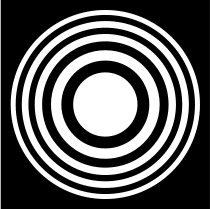
What is a Fresnel Zone Plate?
A Fresnel Zone Plate is a circular diffraction grating composed of radially symmetric rings called Fresnel zones, which alternate between opaque and transparent sections. The design of the zones allows for constructive interference at a specific focal point, creating a focused spot that would not be predicted by traditional ray tracing.
Working Principle:
- Light hitting the transparent areas of the zone plate is diffracted, and the diffracted light from all the zones interferes constructively at a point focus.
- Zone Plate Types: Fresnel Zone Plates can either absorb or phase-shift incoming light, with some reflecting light instead of diffracting it.
In the 2008 case, FZPs achieved a focus size of 15 nm for X-rays, showing the capability of these devices to focus light at incredibly small scales.
Fresnel Zone Plate Design Example
In our design, we use the following specifications:
- Zone Plate Diameter (Z): 200 mm
- Wavelength (λ): 1 μm
- Number of Zones (N): 35

The spacing of the rings is selected to block light from every other Fresnel zone, so that at a distance of 200mm the light diffracted from all the zones interferes constructively. The constructive interference creates a bright focused spot on axis; an effect not predicted by ray tracing.


The zone plate was created by placing one annular obscuration on each of several surfaces; all located at the same plane. The option to “Use Rays To Propagate To Next Surface” is used to speed the computation through all the aperture surfaces.
To verify the focusing power, 66.66mm, 133.32mm, 199.98mm, 266.64mm, and 10000mm positions to check its performance:
Distance @ 66.66mm

Distance @ 132mm

Distance @ 200mm

Distance @ 266mm

Distance @ 10000mm

Near-Field and Far-Field Considerations
The Fresnel number (FN) is used to determine whether the beam is in the near-field or far-field relative to the observation point.
If the Fresnel number is small, less than roughly 1, then the beam at the observation point is said to be in the “far field” relative to the current beam.
For Fresnel numbers larger than 1, the beam at the observation point is said to be in the “near field” relative to the current beam.
A perfectly collimated beam will have a Fresnel number given by:

Which for Z greater than A reduces to approximately

Where A is the radial size of the beam and Z is the distance from the beam to the observation point. The Fresnel number becomes small as Z grows large.
For beams that are not collimated, the concept is the same. A converging beam will have a very small Fresnel number if the observation point is near focus. A perfectly spherical beam converging to focus will have a Fresnel number of zero, since there are no zones where the observed phase reaches π. As the observation point moves from the focal region, the Fresnel number increases.
In the design above:
- Fresnel number @ 66mm is 107.7>>1, which is near field;
- Fresnel number @ 132mm is 54>>1, which is near field;
- Fresnel number @ 200mm is 35>>1, which is near field;
- Fresnel number @ 10000mm is 0.71<1, which is near field.
It is important to consider the terms near and far as being relative to the propagation from the present location of the beam to the observation point at which the Fresnel number is computed, rather than having any rigid relationship to the beam position alone. For example, a beam in the exit pupil of an optical system is typically called the near field because the far field is at focus. However, a short propagation from focus to a slightly out of focus observation point is likely a near field propagation if the defocus is small.
Reference
- https://www.zemax.com/
- http://www.x-ray-optics.de/index.php/en/types-of-optics/diffracting-optics/fresnel-zone-plates#Condenser_zone_plates
- The design file used in this article is attached. What is Fresnel imaging (Fresnel Zone Plate )