
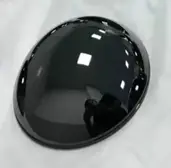
Germanium is classified as a metalloid, not a true metal. Metalloids are elements that exhibit properties intermediate between metals and non-metals, and germanium is a classic example of this category. Its unique combination of physical and chemical characteristics allows it to function effectively as a semiconductor, which is why it plays a critical role in electronics and infrared optics.
Why Germanium Is Classified as a Metalloid
- Physical Appearance: Germanium has a metallic luster and a crystalline structure, similar to metals. However, it is brittle rather than malleable, which distinguishes it from true metals.
- Electrical Conductivity: Unlike metals, which conduct electricity freely, germanium behaves as a semiconductor. Its electrical conductivity can be precisely controlled through doping or optical excitation, a defining characteristic of metalloids.
- Periodic Table Position: Germanium is located in Group 14 (the carbon group) of the periodic table, beneath silicon. Elements in this group—including silicon and germanium—are widely recognized as metalloids due to their shared intermediate behavior.
- Chemical Bonding: Germanium primarily forms covalent bonds, rather than metallic bonds. When exposed to oxygen, it forms a thin germanium oxide (GeO₂) layer, similar to the passivation behavior seen in other metalloids.
Applications That Reflect Germanium’s Metalloid Nature
Electronics and Semiconductors
Germanium’s controllable conductivity makes it valuable in:
- Transistors and diodes
- High-speed and low-noise electronic devices
- Silicon–germanium (SiGe) semiconductor technologies
Infrared Optics
Unlike metals, germanium is transparent in the infrared spectrum (≈2–14 µm). This property enables its use in:
- Infrared lenses and windows
- Thermal imaging systems
- Spectroscopy and sensing applications
Summary
Germanium bridges the gap between metals and non-metals, combining metal-like appearance with semiconductor electrical behavior and unique optical properties. Its classification as a metalloid explains why it is indispensable in both advanced electronics and infrared optical systems, despite not being a true metal.