
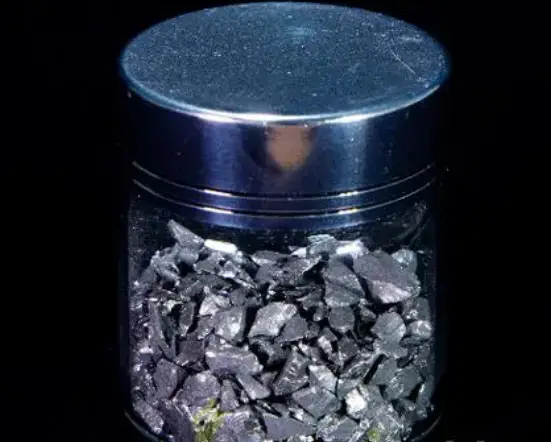
Germanium is considered an expensive material due to a combination of limited supply, complex processing, and strong demand from high-technology industries. Unlike many common metals, germanium is rarely mined directly and is primarily obtained as a byproduct of other extraction processes, which significantly affects its availability and cost.
Limited and Indirect Sources
Germanium does not occur naturally in elemental form. It is mainly recovered as a byproduct of zinc ore processing, with smaller amounts obtained from coal fly ash, copper ores, and silver ores. Because germanium production depends on the mining volume and economics of these primary materials, its supply is inherently constrained and difficult to scale independently.
Complex Extraction and Refining
Recovering germanium from ores and industrial residues requires multi-stage chemical extraction and advanced purification processes. Producing high-purity germanium—especially optical and semiconductor grades—demands sophisticated refining technologies, strict contamination control, and extensive quality assurance, all of which increase production costs.
High Demand from Advanced Technologies
Germanium plays a critical role in infrared optics, thermal imaging systems, fiber optics, satellite components, solar cells, and specialized semiconductor devices. These high-value, rapidly growing industries place sustained demand on a limited supply, contributing to higher market prices.
Concentrated Global Supply
A relatively small number of countries and producers account for the majority of global germanium output. This concentrated supply chain makes the market more sensitive to geopolitical factors, production controls, and export regulations, which can further impact pricing.
Strict Purity Requirements
Many germanium applications—particularly in optical and electronic systems—require extremely high purity levels. Achieving these specifications involves additional processing steps, yield loss, and rigorous inspection, further driving up costs.
Summary
Germanium remains expensive because it is rare, difficult to extract, costly to refine, and essential to advanced technologies. While its price is higher than more abundant materials, its unique properties make it irreplaceable in many high-performance optical and electronic applications.