
ZnSe vs ZnS for infrared applications is an important comparison when selecting materials for infrared windows, lenses, domes, laser optics and protective optical components.
Zinc Selenide and Zinc Sulfide are both infrared optical materials. However, engineers normally select them for different operating requirements. ZnSe is widely used in infrared and CO₂ laser systems, while ZnS is commonly chosen for infrared windows, domes and protective optical components.
This guide explains the main differences between ZnSe and ZnS, including their common applications, available grades, component types and coating options.
ZnSe vs ZnS for Infrared Applications: Main Differences
When choosing an infrared optical material, two common options are ZnSe and ZnS.
ZnSe stands for Zinc Selenide.
ZnS stands for Zinc Sulfide.
Both materials are used in infrared optical systems, but they are not exactly the same. The right choice depends on the application, wavelength range, mechanical requirement, coating requirement, and whether the component is used as a window, lens, dome, or protective cover.
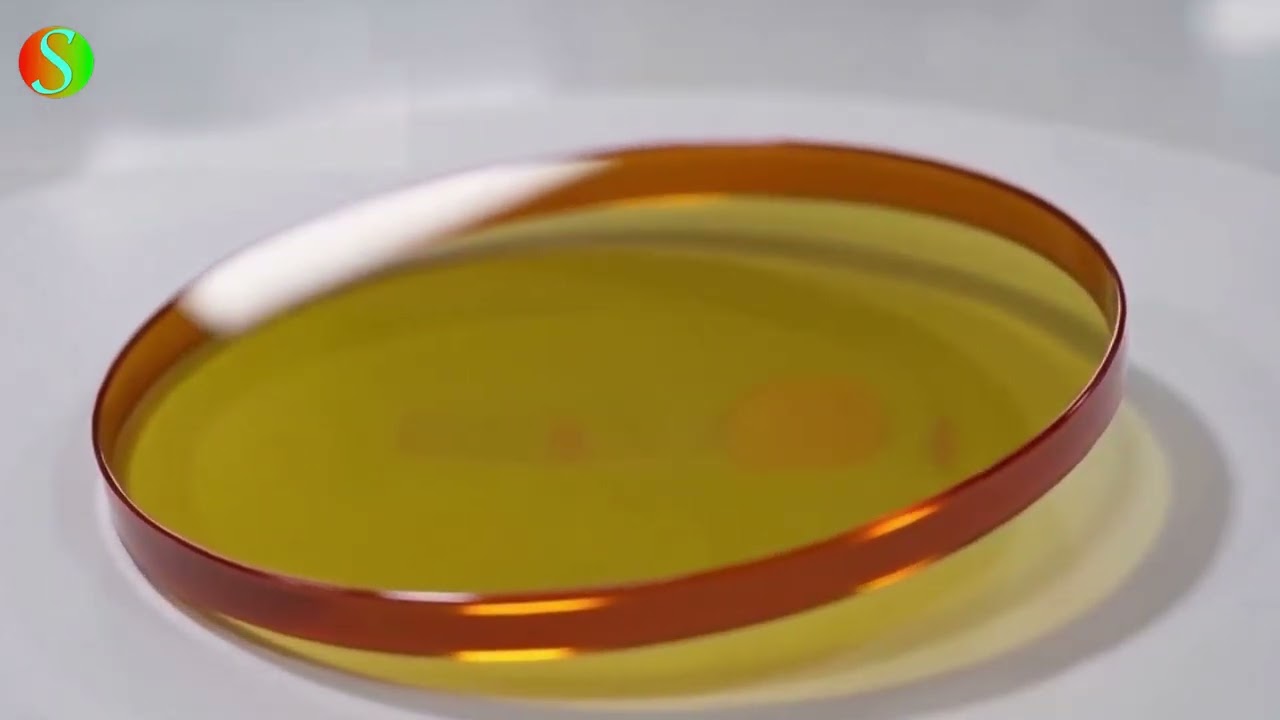

What Is Zinc Selenide—ZnSe?
ZnSe is an optical material commonly used in infrared and laser optical systems.
It is widely used for CO₂ laser optics, infrared windows, lenses, and beam delivery systems.
In simple words, ZnSe is often selected when the system needs good infrared transmission or laser compatibility.
Common ZnSe Infrared and CO₂ Laser Applications
ZnSe is commonly used in:
- CO₂ laser cutting and engraving machines
- Laser protection windows
- Beam delivery systems
- Infrared windows
- Infrared lenses
- IR sensors
- Thermal imaging systems
- Scientific instruments
- Custom infrared optical assemblies
For example, in a CO₂ laser system, a ZnSe window or lens may be used in the laser beam path. It allows the laser energy to pass through while helping to support stable optical performance.
Optical Grade vs Laser Grade ZnSe
ZnSe can be supplied in different grades depending on the application.
Optical Grade ZnSe is commonly used for general infrared applications, such as infrared windows, sensor protection, and thermal imaging systems.
Laser Grade ZnSe is usually recommended for CO₂ laser systems or applications where the component is exposed to laser energy.
| Grade / Type | Common Use | Simple Explanation |
|---|---|---|
| Optical Grade ZnSe | IR windows, sensors, thermal imaging, general optics | Suitable for general infrared optical applications |
| Laser Grade ZnSe | CO2 laser systems, laser windows, beam delivery systems | Recommended when the component is used with laser energy |
What Is Zinc Sulfide—ZnS?
ZnS is an optical material commonly used for infrared windows, domes, and protective optical components.
It is often selected when the system needs infrared transmission and good mechanical durability.
In simple words, ZnS is commonly used when the optical component needs to protect the system while allowing infrared light to pass through.
Common ZnS Infrared Window and Dome Applications
ZnS is commonly used in:
- Infrared windows
- Infrared domes
- Protective optical covers
- Thermal imaging systems
- Surveillance systems
- Aerospace optical systems
- Defense optical systems
- Outdoor monitoring equipment
- Custom infrared optical assemblies
For example, a ZnS optical window may be used as the front protective window of an infrared camera, sensor system, or outdoor optical device.
Optical Grade vs Multispectral ZnS
ZnS can also be supplied in different grades.
Optical Grade ZnS is commonly used for general infrared applications. It is suitable for infrared windows, thermal imaging systems, IR sensors, and protective optical components.
Multispectral ZnS is used when the system needs to work across a wider wavelength range, such as visible and infrared imaging through the same optical window.
| Grade / Type | Common Use | Simple Explanation |
|---|---|---|
| Optical Grade ZnS | Infrared windows, thermal imaging, IR sensors | Suitable for general infrared optical applications |
| Multispectral ZnS | Visible + infrared systems, advanced imaging | Suitable when wider wavelength transmission is required |
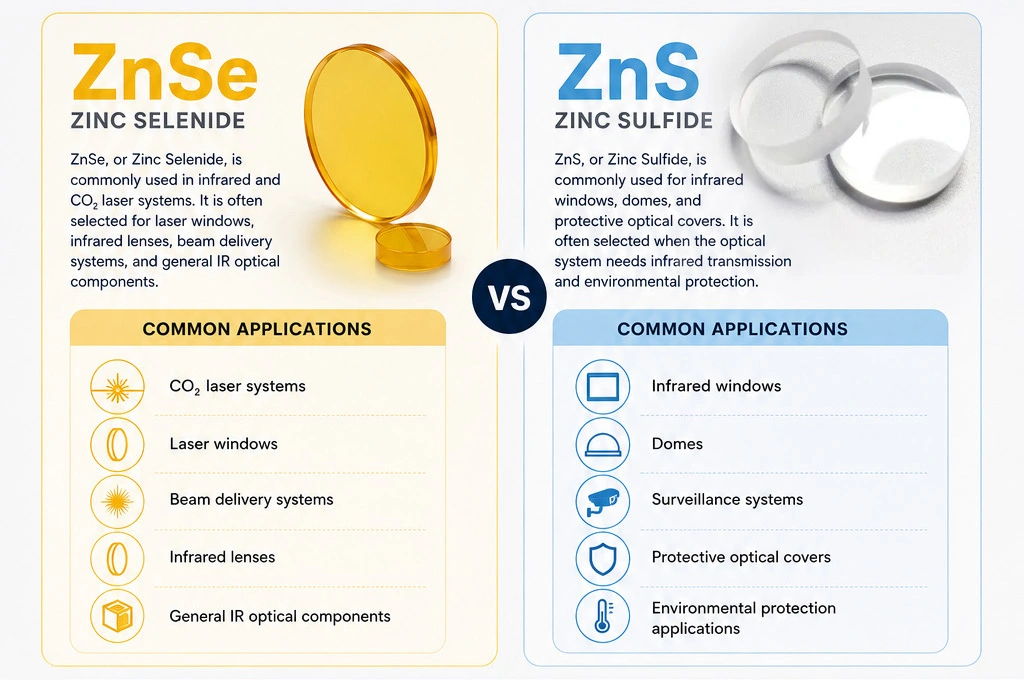
ZnSe vs ZnS Comparison Table
| Item | Zinc Selenide (ZnSe) | Zinc Sulfide (ZnS) |
|---|---|---|
| Common Component Types | Windows, lenses, laser optics | Windows, domes, protective covers |
| Common Applications | CO2 laser, IR systems, beam delivery | Thermal imaging, surveillance, outdoor optical systems |
| Common Grades | Optical Grade, Laser Grade | Optical Grade, Multispectral Grade |
| Main Advantage | Suitable for infrared and CO2 laser applications | Suitable for durable infrared windows and domes |
| Typical Use Case | Laser window or IR lens | Protective IR window or dome |
| Coating Options | Uncoated, AR coating, custom coating | Uncoated, AR coating, custom coating |
How to Choose ZnSe or ZnS for Your Application
You may consider ZnSe if your application is related to:
- CO₂ laser systems
- Laser cutting or engraving
- Beam delivery systems
- Infrared windows or lenses
- General IR transmission
You may consider ZnS if your application requires:
- Infrared protective windows
- Optical domes
- Outdoor optical protection
- Surveillance or defense systems
- Wider wavelength transmission using Multispectral ZnS
ZnSe Window vs ZnS Window
Both ZnSe and ZnS can be used as optical windows, but the selection depends on the system.
A ZnSe window is often used in infrared and laser systems.
A ZnS window is often used when the system needs infrared transmission together with better environmental protection or wider wavelength options.
If the application involves CO₂ laser energy, ZnSe is commonly considered.
If the application involves a protective front window or dome for an infrared system, ZnS may be considered.
Coating Options for ZnSe and ZnS Infrared Optics
Both ZnSe and ZnS optical components can be supplied as uncoated or coated components.
Common coating options include:
- Uncoated/polished
- AR coating
- Custom infrared coating
AR coating can help reduce reflection and improve transmission at the required wavelength range.
The coating should be selected based on the application, wavelength range, angle of incidence, and operating environment.
What Information Should You Provide Before Requesting a Quote?
To request a ZnSe or ZnS optical component, it is helpful to provide:
- Material preference: ZnSe or ZnS
- Material grade, if known
- Component type: window, lens, dome, or blank
- Diameter, size, or drawing
- Thickness
- Wavelength range
- Coating requirement
- Surface quality
- Surface flatness
- Clear aperture
- Quantity
- Application or system type
If you are not sure which material is suitable, you can provide your application and wavelength range. Our team can help recommend a suitable material and coating option.
Example Specification Table
| Item | Example Specification |
|---|---|
| Material | ZnSe / ZnS |
| Material Grade | Optical Grade / Laser Grade ZnSe / Multispectral ZnS |
| Component Type | Optical window |
| Shape | Round flat window |
| Diameter | 50.00 mm +0.00 / -0.10 mm |
| Thickness | 5.00 mm ±0.10 mm |
| Wavelength Range | 8–12 µm / 10.6 µm / custom range |
| Surface Quality | 60/40 scratch-dig |
| Surface Flatness | λ/2 @ 632.8 nm |
| Clear Aperture | ≥ 90% |
| Coating Requirement | Uncoated / AR coating / custom coating |
| Edge / Chamfer | Protective chamfer, 0.2 mm × 45° |
| Quantity | 10 pcs |
| Application | CO2 laser / thermal imaging / IR sensor / surveillance system |
Conclusion
ZnSe and ZnS are both useful materials for infrared optical systems, but they are often selected for different applications.
ZnSe is commonly used for infrared and CO₂ laser applications, including laser windows, lenses, and beam delivery systems.
ZnS is commonly used for infrared windows, domes, protective covers, and systems that require durable optical protection.
Shape Optics Technologies supplies custom ZnSe and ZnS optical components, including optical windows, lenses, domes, coated optics, and custom infrared components based on customer drawings and application requirements.
Contact us to discuss your ZnSe or ZnS optical component requirements.