
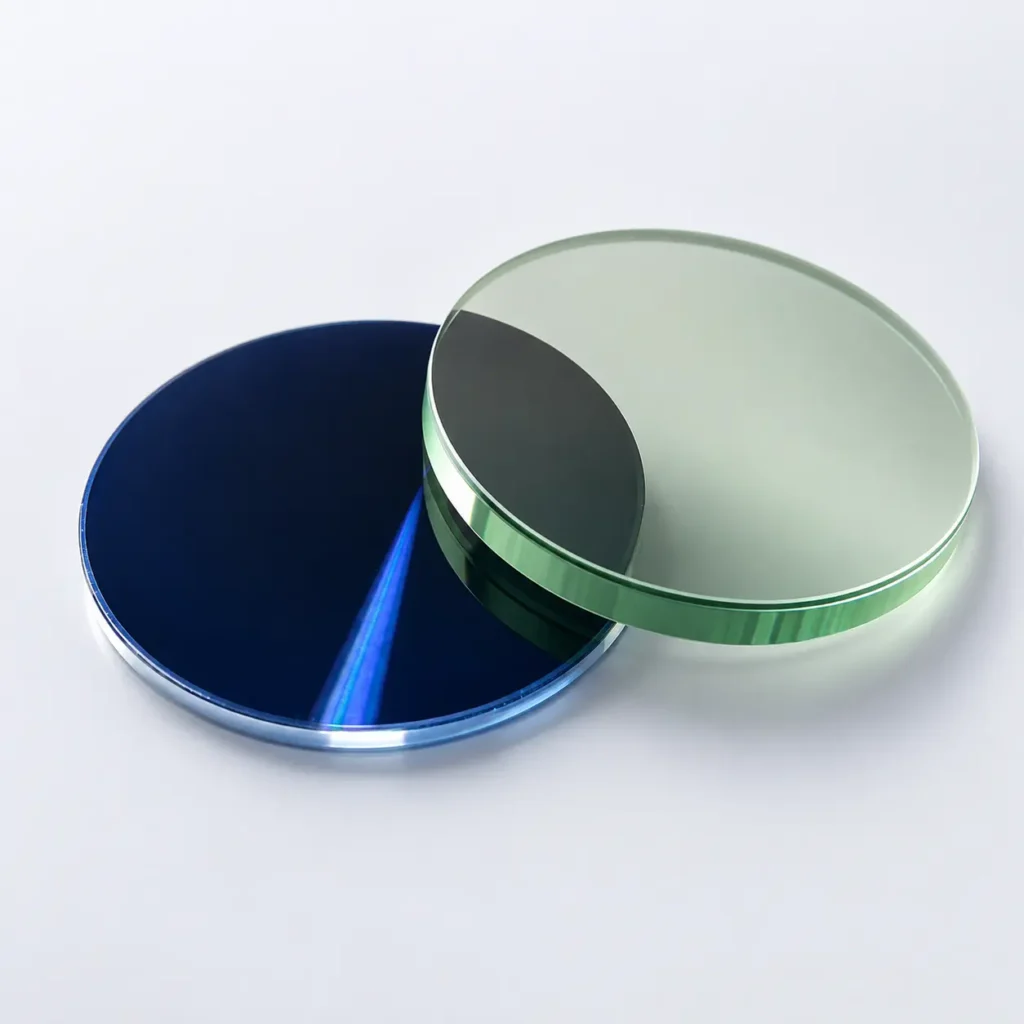
Chalcogenide glass is a special type of optical material designed for infrared applications. In some product series, it is also known as IRG material or IRG glass.
Unlike standard visible optical glass, this material can transmit selected infrared wavelengths. Therefore, manufacturers use it for thermal imaging lenses, infrared sensors, optical windows, molded optics, and custom IR components.
Depending on the optical design, IRG material may also provide an alternative to Germanium. However, engineers should compare the wavelength range, optical performance, mechanical requirements, operating environment, coating requirements, and production quantity before selecting the final material.
In addition, these optical components can support AR coating, DLC coating, and other custom infrared coatings according to application requirements.
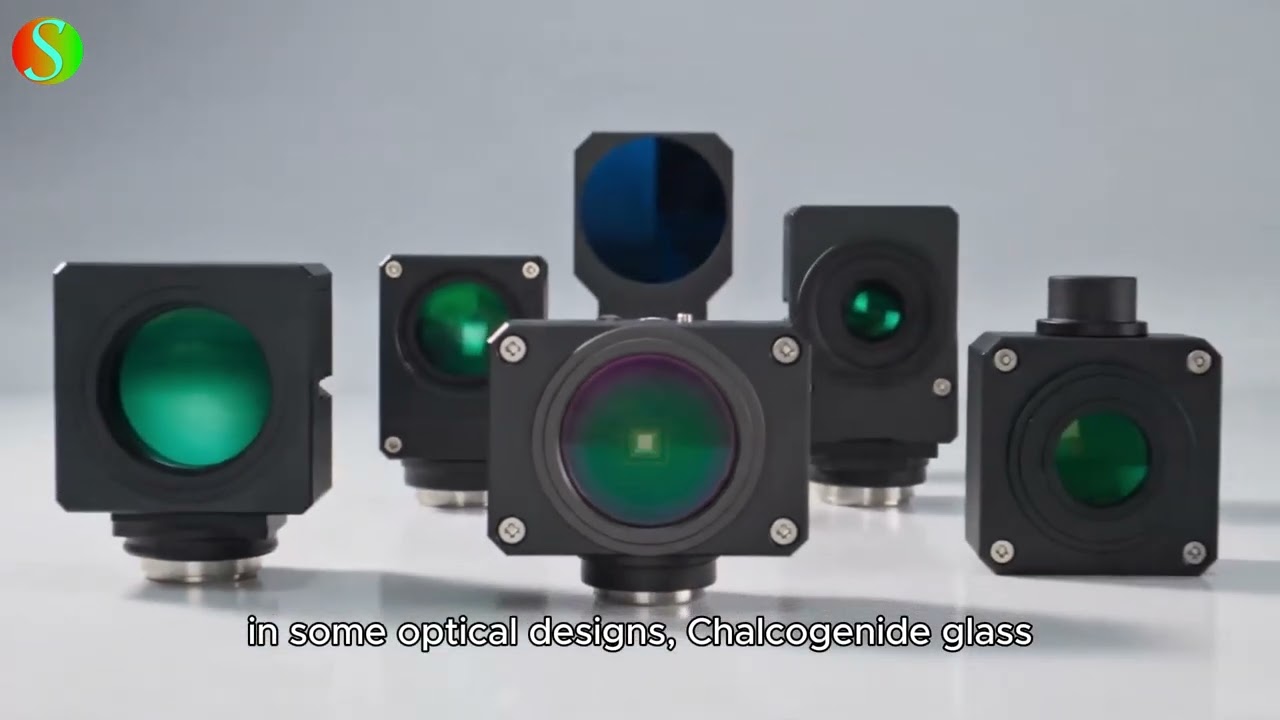

Why Use IRG Glass for Infrared Optics?
Infrared optical systems require materials that can transmit energy within specific infrared wavelength ranges.
IRG glass provides designers with another material option for these systems. It is particularly useful for infrared lenses, molded optics, and compact thermal imaging assemblies.
Depending on the grade and optical design, the material may support:
- Infrared transmission
- LWIR or MWIR optical designs
- Molded optical components
- Custom infrared lens elements
- Compact thermal imaging lenses
- Alternative IR material selection
- High-volume optical production
- Potential material or manufacturing cost optimization
However, different grades have different optical and mechanical properties. Therefore, designers should select the material according to the required wavelength, lens geometry, coating, operating temperature, tolerances, and final application.
IRG Material as an Alternative to Germanium
Germanium is one of the most established materials for infrared optics, particularly for MWIR and LWIR applications.
However, it may not provide the best solution for every optical system.
For suitable designs, an IRG material can provide another option when engineers require:
- An alternative infrared lens material
- Molded infrared optics
- Compact lens designs
- Reduced dependency on Germanium
- Different manufacturing methods
- High-volume IR lens production
- Potential cost optimization
Nevertheless, the two materials are not interchangeable in every design.
Their refractive index, transmission range, thermal properties, mechanical characteristics, coating compatibility, and manufacturing processes can differ significantly.
Therefore, customers considering a material substitution should provide their existing optical specification, wavelength range, operating conditions, and performance requirements for evaluation.
Common Chalcogenide Glass Optical Components
Infrared glass can be manufactured into many different optical forms.
Common examples include:
- Infrared lenses
- Molded IR lenses
- Optical windows
- Optical blanks
- Custom lens elements
- Thermal imaging optics
- Infrared sensor optics
- Optical assemblies
Among these products, infrared lenses and molded optics are particularly common applications.
Infrared Lenses
One major application is infrared lens manufacturing.
The lens collects infrared energy from the scene and focuses it onto the detector or focal plane array inside the imaging system.
Depending on the design, these lenses may support applications such as:
- LWIR thermal cameras
- MWIR infrared systems
- Infrared sensors
- Surveillance systems
- Industrial thermal imaging
- Security equipment
- Custom infrared lens modules
The actual material grade depends on the spectral range and optical performance required by the system.
Molded IR Optics
Another important application is molded infrared optics.
Traditional optical components commonly require grinding, polishing, and other machining processes. In comparison, suitable IR glass grades may support precision molding for certain lens designs.
As a result, molded optics can offer advantages for projects that require repeatable lens geometries or larger production quantities.
Typical applications include:
- Compact thermal camera lenses
- Infrared sensor optics
- Small IR lens assemblies
- OEM thermal imaging modules
- Custom molded lens elements
However, molding is not automatically suitable for every project. Engineers must consider lens shape, tolerances, production quantity, material grade, and optical performance before selecting this manufacturing method.
Coating Options for Infrared Glass
Optical performance does not depend only on the substrate.
Coatings can also improve transmission, reduce unwanted reflections, or provide additional surface protection.
Depending on the application, coating options may include:
- Uncoated optics
- AR coating
- DLC coating
- Custom infrared coating
AR Coating
AR stands for anti-reflection.
An AR coating helps reduce surface reflection and improve transmission through the optical component.
For infrared lenses and windows, engineers can design the coating according to a required spectral range, such as:
- MWIR
- LWIR
- Broad infrared ranges
- Custom wavelength bands
The final coating performance depends on the substrate, wavelength range, angle of incidence, operating environment, and optical design.
DLC Coating
DLC stands for Diamond-Like Carbon.
This coating can provide additional surface protection for certain infrared optical components. Therefore, designers may consider it for applications where an external optical surface faces environmental exposure or harsher operating conditions.
For example, a protective infrared window or exposed lens surface may use DLC when the design requires greater surface durability.
In simple terms:
- AR coating: helps reduce reflection and improve transmission
- DLC coating: provides additional surface protection
- Custom coating: targets specific wavelength and system requirements
The final coating design should consider the substrate grade, coating side, wavelength range, incident angle, operating environment, and optical performance.
Chalcogenide Glass vs Germanium
Both materials can support infrared optical systems, but they offer different design and manufacturing characteristics.| Item | Chalcogenide Glass / IRG | Germanium |
|---|---|---|
| Common Use | IR lenses, molded optics, windows, custom components | IR windows, lenses, domes, blanks, coated optics |
| Lens Design | Suitable for infrared lens design and molded optics | Commonly used for high-performance IR lenses and windows |
| Manufacturing Option | Can support molded IR optics for suitable projects | Commonly processed by cutting, grinding, polishing, and diamond turning |
| Coating Option | AR coating, DLC coating, custom IR coating | AR coating, DLC coating, BBAR coating, custom IR coating |
| Selection Reason | Alternative IR material, design flexibility, molded optics | Established IR material, strong use in MWIR and LWIR systems |
| Final Choice Depends On | Wavelength, design, coating, quantity, application | Wavelength, design, coating, quantity, application |
Neither material is automatically better.
Instead, designers should evaluate the requirements of the complete optical system before making the final selection.
Chalcogenide Glass vs Other Infrared Materials
Several materials can transmit infrared energy. However, each material has different optical, mechanical, thermal, and manufacturing characteristics.
Common infrared optical materials include Silicon, Zinc Selenide, Zinc Sulfide, Germanium, and IRG materials.| Material | Common Use | Simple Explanation |
|---|---|---|
| Chalcogenide Glass / IRG | IR lenses, molded optics, custom components | Suitable for infrared lens design and thermal imaging optics |
| Silicon | IR windows, lenses, sensor protection | Strong and cost-effective for selected IR applications |
| ZnSe | IR windows, lenses, laser optics | Common for infrared and CO2 laser systems |
| ZnS | IR windows, domes, protective covers | Useful for infrared protection and durable optical parts |
| Germanium | IR windows, lenses, domes, blanks | Well-known IR material for MWIR and LWIR applications |
Because each application has different requirements, material selection should consider more than wavelength alone.
For example, operating temperature, mechanical durability, coating requirements, production quantity, optical power, lens geometry, and system cost may also influence the final choice.
What Information Should You Provide for a Quotation?
Providing a complete specification helps the optical manufacturer evaluate manufacturability and prepare a more accurate quotation.
Useful information includes:
- Material grade, if known
- Component type
- Diameter or overall size
- Thickness or center thickness
- Lens shape
- Wavelength range
- Surface quality
- Surface figure
- Dimensional tolerances
- Clear aperture
- Coating requirement
- Coating side
- Quantity
- Application
- 2D drawing
- 3D model or optical design file, if available
For lenses, it is also helpful to provide radius, effective focal length, center thickness, edge thickness, clear aperture, and other optical tolerances.
If you are evaluating IRG material as a replacement for Germanium, you can also provide the existing Germanium component specification for comparison.
Example Specification for an IRG Optical Component
The table below shows a simple example of the information commonly required for evaluation.| Item | Example Specification |
|---|---|
| Material | Chalcogenide Glass / IRG material |
| Component Type | Infrared lens / optical blank / window |
| Shape | Round lens / flat window / custom shape |
| Diameter | 25.00 mm +0.1 / -0.0 mm |
| Thickness | 3.00 mm +0.1 / -0.0 mm |
| Wavelength Range | MWIR / LWIR / custom IR range |
| Surface Quality | 60/40 scratch-dig, or based on requirement |
| Surface Figure | Based on optical design |
| Coating Requirement | Uncoated / AR coating / DLC coating / custom IR coating |
| Coating Side | One side / both sides / based on requirement |
| Clear Aperture | ≥ 90%, or based on drawing |
| Edge / Chamfer | Protective chamfer, based on requirement |
| Quantity | 10 pcs / prototype / batch production |
| Application | Thermal imaging lens / IR sensor / infrared optical system |
Conclusion
Chalcogenide glass provides an important material option for modern infrared optical systems.
Its ability to support infrared transmission, custom lens designs, and selected molding processes makes it useful for thermal imaging lenses, sensor optics, optical windows, and compact IR assemblies.
In suitable applications, IRG materials may also provide an alternative to Germanium. However, the correct choice depends on the complete optical and environmental requirements rather than on a single material property.
If you are developing an infrared optical component, lens, or thermal imaging system, Shape Optics Technologies can evaluate the material, coating, optical specification, and manufacturing requirements based on your application. Contact us to discuss your Chalcogenide Glass or IRG optical component requirements.