
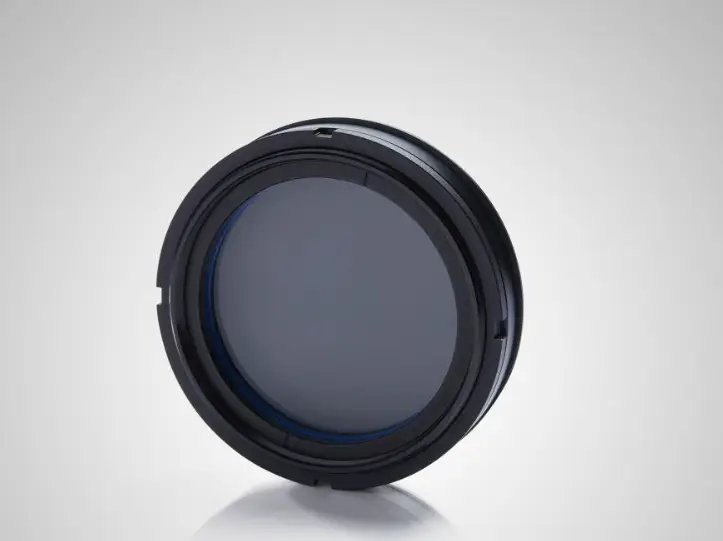
UV Fused Silica vs Optical Quartz: Understanding JGS1, JGS2, and JGS3
If you work with UV optics, lasers, or precision optical components, you’ve likely encountered terms such as optical quartz, UV quartz, fused silica, and the grades JGS1, JGS2, and JGS3. These terms are often used interchangeably, which can cause confusion during material selection. This article clarifies what JGS grades really mean and how they relate to UV fused silica.
Optical Quartz vs Fused Silica: The Key Difference
Although commonly called “optical quartz,” JGS materials are not crystalline quartz.
- Crystalline quartz is anisotropic, exhibits birefringence, and is rarely used in modern imaging or laser optics.
- Fused silica is an amorphous (glassy) form of SiO₂, isotropic, birefringence-free, and widely used for high-performance optical systems.
JGS1, JGS2, and JGS3 are all fused silica. They are not true optical quartz crystals
The term “optical quartz” is largely historical and refers to the quartz raw material used to produce fused silica.
What Does JGS Mean?
JGS (精光石) is a Chinese industrial grading system for fused silica.
It classifies materials based on:
- Manufacturing process
- Hydroxyl (OH) content
- UV and IR transmission performance
JGS is not a different material type, but a performance-based classification within fused silica.
JGS Grades Explained
JGS1 – UV-Grade Fused Silica
JGS1 is synthetic fused silica produced from high-purity chemical precursors. It contains high hydroxyl content and offers excellent deep-UV transmission.
Key features
- High transmission down to 185 nm
- Bubble- and inclusion-free
- Best choice for deep-UV optics
Typical applications
- UV laser optics
- Lithography systems
- UV windows, prisms, and lenses
International equivalents
- Corning 7980
- Heraeus Suprasil 1 / 2
- Saint-Gobain Spectrosil A / B
JGS2 – UV–Visible Fused Silica
JGS2 is made by melting natural quartz crystal and gas refining. It provides good UV and visible transmission with lower cost than JGS1.
Key features
- UV transmission from ~220 nm
- Moderate OH content
- Economical choice for UV–VIS optics
Typical applications
- Condenser optics
- Optical flats
- Sight glasses
- General-purpose UV windows
International equivalents
- Heraeus Homosil series
- Dynasil 1000 / 4000
JGS3 – Broadband UV–IR Fused Silica
JGS3 is designed for applications requiring wide spectral coverage, from UV to infrared.
Key features
- Excellent IR transmission
- Low OH content
- Suitable for multi-spectral systems
Typical applications
- UV–IR broadband windows
- Spectroscopy
- Multi-band optical systems
International equivalent
Heraeus Suprasil 300
JGS vs UV Fused Silica: Are They Different?
Chemically: No difference
Terminology: Yes
| Term | Meaning | Usage |
|---|---|---|
| Optical Quartz (JGS) | Industrial name for fused silica | China / Asia |
| UV Fused Silica | Correct material term | Global |
| Suprasil / Spectrosil | Brand names | Europe / USA |
UV fused silica is the internationally correct term. JGS is a regional grading system.
How to Select the Right JGS Grade
| Application | Recommended Material |
|---|---|
| Deep UV (185–200 nm) | JGS1 UV fused silica |
| UV–Visible optics | JGS2 fused silica |
| UV–IR broadband | JGS3 fused silica |
| High-power UV laser | Synthetic fused silica (JGS1) |
| Cost-sensitive UV window | JGS2 |
Summary
JGS1, JGS2, and JGS3 are all fused silica materials—not crystalline quartz.
Understanding the JGS classification helps you select the correct UV fused silica grade for performance, cost, and wavelength requirements.
If you need assistance selecting the right fused silica material for your optical system, Shape Optics’ engineers are happy to help.