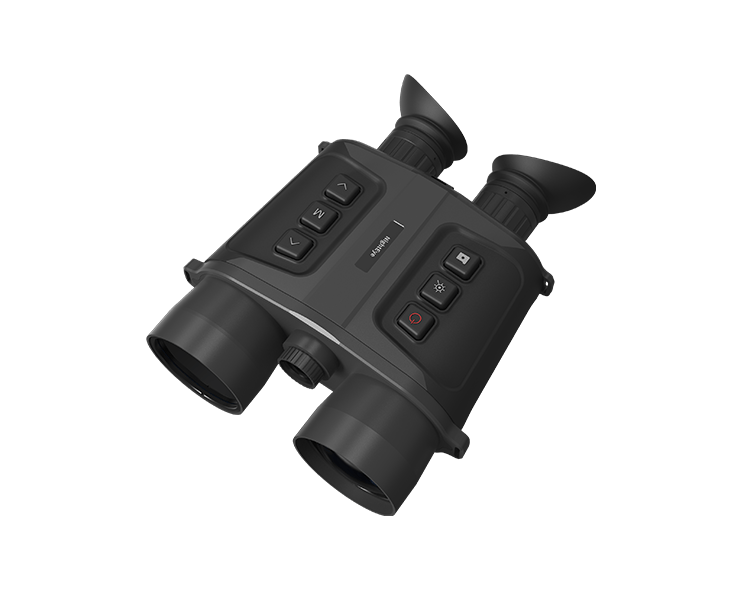
Handheld Thermal Binocular

Handheld Thermal Binocular | Multi-Sensor Infrared Telescope

A handheld thermal binocular is an advanced electro-optical observation device that combines dual-eyepiece binocular viewing with thermal imaging technology. Instead of relying on visible light, it detects infrared radiation (heat signatures) emitted by objects and converts them into a thermal image, enabling clear visibility in total darkness, smoke, fog, or adverse weather conditions.

Compared with monocular thermal devices, binocular thermal systems provide a more natural and comfortable viewing experience, significantly reducing eye strain during long-duration surveillance and reconnaissance tasks.


Critical Specifications of Handheld Thermal Binoculars

  • Thermal Sensor Resolution: Higher pixel resolution improves image detail, target recognition, and situational awareness.
  • Magnification: Determines how close distant targets appear. Higher magnification supports long-range observation but may narrow the field of view.
  • Field of View (FOV): Wider FOV is ideal for scanning large areas, while narrower FOV enables precise long-range identification.
  • Refresh Rate: Higher refresh rates deliver smoother imaging, especially when tracking moving targets.
  • Detection Range: Maximum distance at which heat signatures can be detected, recognized, or identified.
  • Battery Life: Critical for extended missions and field operations.
  • Durability & Environmental Resistance: Waterproof, dustproof, and shock-resistant designs ensure reliable operation in harsh environments.


Applications of Handheld Thermal Binoculars

Handheld thermal binoculars are widely used across professional and operational fields:

  • Military & Security – Night patrols, surveillance, reconnaissance, and border monitoring
  • Law Enforcement – Covert operations and nighttime observation
  • Wildlife Observation & Hunting – Tracking animals through darkness or dense vegetation
  • Search & Rescue – Locating people in smoke, fog, forests, or disaster zones
  • Maritime Operations – Night navigation and detection of vessels or obstacles on water


How to Select Handheld Thermal Binoculars

When choosing a handheld thermal binocular, consider the following factors:

  • Intended Use: Military-grade surveillance, law enforcement, hunting, or recreational observation will determine required performance levels.
  • Sensor Performance: Resolution, NETD, and detection range directly impact image quality and target recognition.
  • Weight & Ergonomics: Balanced, ergonomic designs reduce fatigue during prolonged handheld use.
  • Integrated Features: GPS, laser rangefinder, electronic compass, recording, and wireless transmission can significantly enhance operational efficiency.
  • Budget vs Capability: Balance performance requirements with cost, especially for multi-sensor systems.


SOTTC Series Handheld Thermal Binocular

The SOTTC series is a high-performance handheld thermal binocular that integrates thermal imaging, visible-light imaging, laser ranging, and satellite positioning into a single rugged platform. Designed for professional use, it delivers multi-spectral observation and precise target acquisition in nighttime and no-light environments.

Equipped with a long-range laser rangefinder, GPS/BeiDou dual-positioning, and a high-accuracy electronic compass, the SOTTC series enables users to accurately detect, identify, measure, and locate targets under demanding operational conditions.


Key Features of SOTTC Thermal Binocular

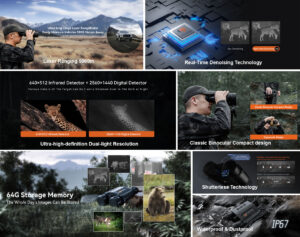
  • High-resolution 640×512 thermal detector (12 μm)
  • Integrated visible-light camera for multispectral fusion
  • Long-range 1535 nm eye-safe laser rangefinder
  • GPS & BeiDou dual-satellite positioning
  • High-sensitivity electronic compass
  • Binocular viewing for enhanced comfort and depth perception
  • Built-in recording, WiFi transmission, and onboard storage
  • IP67 waterproof design for harsh environments


Technical Specifications – SOTTC-640-55

Imaging Performance

Parameter Thermal Visible Light
Resolution 640 × 512 / 12 μm 2592 × 1944 / 2.0 μm
Objective Lens 55 mm F1.0 25 mm F1.8
Field of View 7.94° × 6.37° 11.8° × 8.9°
Frame Rate 25 Hz 30 Hz
NETD ≤ 50 mK @ 300 K


Detection Range (Human)

  • Identification: 650 m (thermal) / 900 m (visible)
  • Recognition: 1300 m (thermal) / 1800 m (visible)
  • Detection: 5200 m (thermal) / 7100 m (visible)


Laser Ranging & Navigation

  • Laser Wavelength: 1535 nm (eye-safe)
  • Max Measuring Range: Human 2300 m / Vehicle 5000 m
  • Measuring Accuracy: ±0.5 m to ±2 m
  • Positioning: GPS & BeiDou dual positioning
  • Electronic Compass: Supported


System & Environment

  • Display: 0.39″ OLED, 1024 × 768
  • Observation Mode: Binocular
  • Eye Relief: 30 mm
  • Battery: Four 18650 batteries
  • Standby Time: ≥ 6 h
  • Storage: 64 GB onboard memory
  • Interfaces: USB-C / HDMI
  • Transmission: WiFi
  • Waterproof Rating: IP67
  • Weight: ≤ 1350 g
  • Operating Temperature: −25 °C to +55 °C