
Cooled vs. Uncooled Thermal Cameras: Which One is Right for You?
Thermal cameras have become essential tools in various industries, from security and firefighting to aerospace and research. When it comes to choosing the right thermal camera, understanding the difference between cooled and uncooled thermal cameras is crucial. Below, we break down both types to help you decide which suits your needs best.
Cooled Thermal Cameras
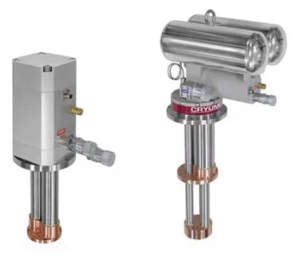
Cooled thermal cameras use a cooling system (typically a cryocooler as shown in the image below) to lower the temperature of the infrared detector, reducing thermal noise and enhancing sensitivity. This results in high-quality, clear thermal images and the ability to detect weaker infrared signals over longer distances.
Uncooled Thermal Cameras
Uncooled thermal cameras, on the other hand, do not require a cooling system. These cameras use detectors that operate at ambient temperature and are more compact and cost-effective. While they are less sensitive than cooled cameras, they are still effective for general thermal imaging tasks.
Key Features
| Feature | Cooled Thermal Cameras | Uncooled Thermal Cameras |
|---|---|---|
| Cooling System | Uses a cryocooler to cool the detector | No cooling system required |
| Sensitivity | High sensitivity, can detect weak infrared signals | Lower sensitivity, less effective in weak signals |
| Image Quality | High-quality, clear images with minimal noise | Reduced image quality, more thermal noise |
| Size & Weight | Larger and heavier due to cooling system | Smaller, lighter, and portable |
| Battery Life | Shorter battery life due to the cooling system | Longer battery life |
| Cost | More expensive due to advanced technology | More affordable and budget-friendly |
| Applications | Long-range surveillance, military, aerospace | Security, building inspections, consumer-grade |
Applications
Cooled Thermal Cameras
Cooled thermal cameras are designed for high-performance, long-range, and detailed thermal imaging. Key applications include:
- Military and Defense: Long-range surveillance, target acquisition, and tactical operations.
- Aerospace: Satellite imaging and high-altitude reconnaissance.
- Industrial Inspections: High-precision inspections of electrical equipment, power plants, and more.
- Research: Used for scientific research requiring high sensitivity and precision.
Uncooled Thermal Cameras
These cameras are more common in consumer-grade applications, offering adequate performance for general use. Typical applications include:
- Security & Surveillance: Home and commercial security, perimeter monitoring.
- Firefighting: Detecting hotspots through smoke.
- Automotive: Night vision systems in vehicles for pedestrian detection and obstacle identification.
- Building Inspections: Identifying heat loss, energy inefficiencies, and plumbing issues in homes or buildings.
Cost
Cooled Thermal Cameras:
High-cost due to the inclusion of a cooling system, specialized sensors, and higher-end components. These cameras are typically used in high-precision and professional-grade applications, where image quality and sensitivity are crucial.Uncooled Thermal Cameras:
Lower-cost and more budget-friendly. Since they don’t require cooling systems, they are suitable for consumer applications or those with a smaller budget while still offering decent thermal imaging capabilities.
Comparison Table
| Feature | Cooled Thermal Cameras | Uncooled Thermal Cameras |
|---|---|---|
| Cooling Mechanism | Cryocooler (cooling system) | No cooling system |
| Image Sensitivity | High (detects weak infrared signals) | Lower (less sensitivity) |
| Image Quality | High-quality, low thermal noise | Reduced image clarity, more noise |
| Size & Weight | Larger, heavier | Smaller, lighter |
| Battery Life | Shorter | Longer |
| Cost | High | Low |
| Typical Applications | Military, aerospace, industrial inspections | Security, automotive, building inspections |
Summary
When choosing between a cooled or uncooled thermal camera, consider the specific needs of your application:
- Cooled Thermal Cameras are ideal for high-precision, long-range, and detailed thermal imaging in demanding environments like military, aerospace, and industrial inspections.
- Uncooled Thermal Cameras are affordable, portable, and suited for general-purpose applications such as security, firefighting, and building inspections.